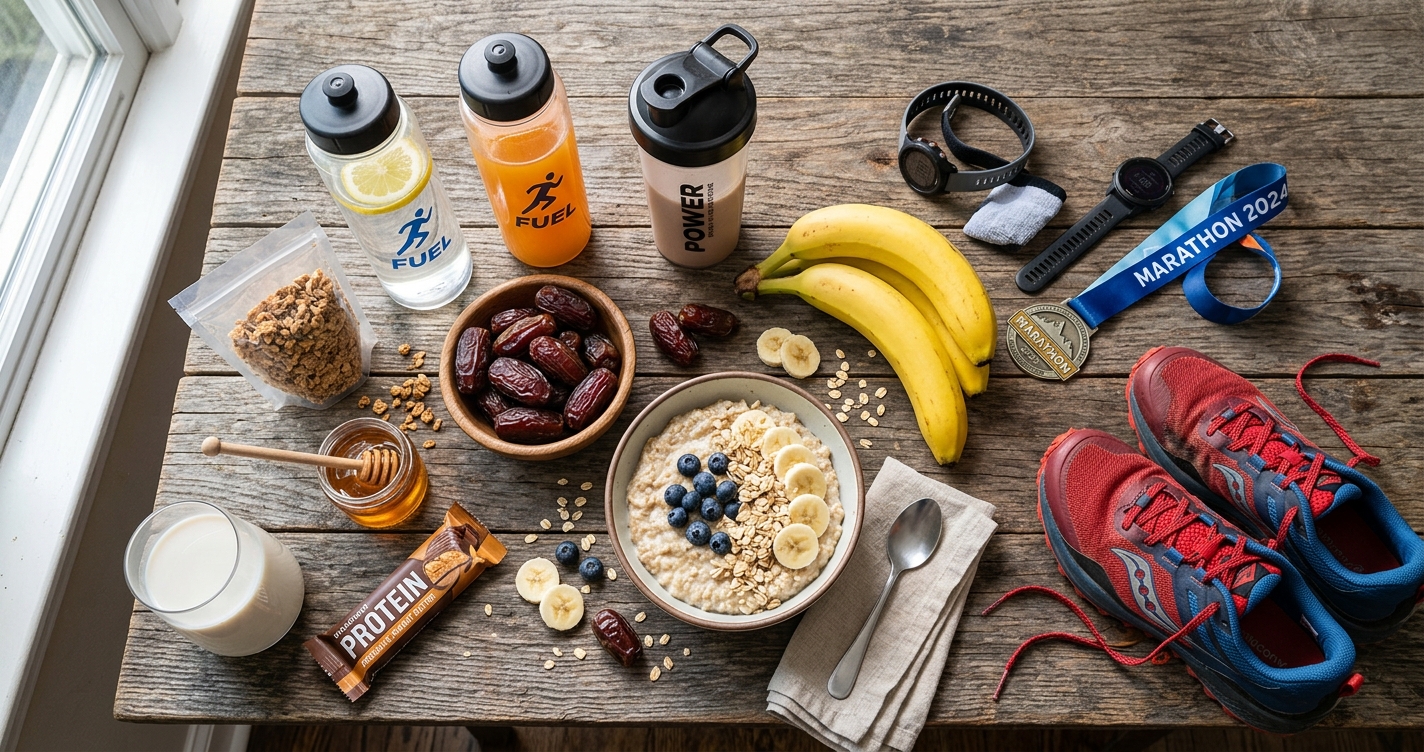
Nutrition is the foundation of running performance. You can have a perfect training program, but if your fueling is wrong, you'll never reach your potential. In my years of competition across the UAE and the Gulf region, I've learned that nutrition separates athletes who merely train hard from those who perform well on race day. This guide gives you everything you need to fuel your running correctly.
The Big Picture: What Runners Need
Running is an aerobic sport that primarily burns carbohydrates and fat as fuel. Your nutritional needs are straightforward:
- Carbohydrates: Your primary fuel source, especially for any intensity above easy pace. Stored as glycogen in muscles and the liver.
- Protein: Essential for muscle repair and adaptation. Runners need more than sedentary people — approximately 1.4–1.8g per kilogram of body weight per day.
- Fat: Important for easy-pace endurance, hormone production, and absorbing fat-soluble vitamins. Don't fear healthy fats.
- Micronutrients: Iron (critical for oxygen transport), calcium (bone health), vitamin D, and magnesium are especially important for runners.
Before You Run: Pre-Run Nutrition
What you eat before a run depends on its duration and intensity:
Pre-Run Timing Guide
- 3–4 hours before: Full meal — rice, pasta, or bread with lean protein (chicken, fish) and vegetables. This gives full digestion time.
- 1–2 hours before: Smaller, easy-to-digest snack — banana with peanut butter, oats with honey, or a slice of toast with jam.
- 30–45 minutes before: Simple carbohydrate only — a ripe banana, a few dates, or a small energy gel. Nothing heavy.
- Morning runs (fasted): For easy runs under 60 minutes, many runners do fine without eating. For longer or harder runs, have something small even if early.
During Running: Fueling on the Move
For runs under 60–75 minutes at easy effort, water is all you typically need. Once runs exceed 75 minutes, you need to replace glycogen to maintain performance:
- Carbohydrate target: 30–60g of carbohydrate per hour for runs over 75 minutes
- Energy gels: The most convenient option. One gel every 30–45 minutes during a long run or race. Always take with water, not on their own.
- Sports drinks: Isotonic drinks provide both carbohydrates and electrolytes simultaneously — very useful in hot UAE conditions.
- Real food: Dates are an excellent natural runner's fuel — widely available in the UAE and very high in fast-digesting carbohydrates.
- Practice before race day: Always test your fueling strategy in training. Never try a new gel or drink on race day.
After Running: Recovery Nutrition
The post-run window — particularly the 30–60 minutes after finishing — is crucial for recovery. Miss this window and your next training session will suffer:
- Carbohydrates: Replenish glycogen stores as quickly as possible. Aim for 1–1.2g per kilogram of body weight within the first hour.
- Protein: Consume 20–30g of protein to begin muscle repair. This can be a protein shake, chocolate milk, eggs, or a chicken wrap.
- Hydration: Rehydrate with water and electrolytes (see previous article on UAE heat running for specifics).
- Practical example: A banana with Greek yogurt and a handful of granola is a simple, effective recovery snack that provides both carbs and protein.
Daily Nutrition for Runners
It's not just about the sessions — your overall daily diet determines your training quality and recovery rate:
- Eat enough calories. Underfueling is one of the most common mistakes in runners — especially those trying to lose weight while training hard. Chronic caloric restriction impairs performance, increases injury risk, and disrupts hormones.
- Prioritize whole foods. Vegetables, fruits, whole grains, legumes, lean meats, fish, eggs, nuts. These provide micronutrients that processed foods lack.
- Don't skip carbohydrates. Low-carb diets are not optimal for runners who are training hard. Carbohydrates are your body's preferred fuel for running intensity.
- Iron-rich foods. Especially important for female runners. Include red meat occasionally, dark leafy greens, lentils, and fortified cereals. Pair with vitamin C for better absorption.
Nutrition in the UAE Context
Training in the UAE adds specific nutritional challenges:
- Higher sweat losses mean greater electrolyte needs, particularly sodium. Don't be afraid of salt.
- During Ramadan, fasting runners should focus on nutrient-dense meals at Suhoor (pre-dawn) and Iftar (sunset). Schedule runs after Iftar when possible. Stay extra vigilant about hydration during eating windows.
- Vitamin D deficiency is common in the UAE due to limited outdoor sun exposure (most people avoid the midday sun). Consider supplementing under medical guidance.
Race Day Nutrition Plan
Half Marathon Race Day Example
- 3 hours before: Oats with banana, honey, and 500ml water
- 1 hour before: 1 ripe banana + 300ml water
- Race start: Small sip of water at each water station
- Km 6–7: First energy gel with water
- Km 12–13: Second energy gel with water
- Finish: Banana, isotonic drink, recovery protein within 30 minutes
"Eating for running is not complicated — eat real food, enough of it, at the right times. The athlete who fuels properly always outlasts the one who doesn't."
Get a Nutrition Plan Built for Your Training
Coach Noaman includes personalized nutrition guidance in his Online Gold Program coaching program. No guessing — just clear, practical fueling advice.
View Programs Ask Noaman